
First-timer guide
What to Expect on Your First African Safari
Your first safari explained: a typical day, vehicles and guides, wildlife, lodges, tipping, what to pack and common mistakes, from a local Kenyan operator.
The First-Timer Cheat Sheet
- Days are early. Expect a wake-up call around dawn, because the best game viewing is in the cool of the morning.
- Choose two or three parks, not six. You will see more by staying longer in fewer places.
- Pack layers in neutral colours, plus binoculars and a hat.
- Be patient. Safari is about searching and finding. Animals are wild, so sightings cannot be guaranteed.
- Trust your guide. A good driver-guide is the single biggest factor in how much you see.
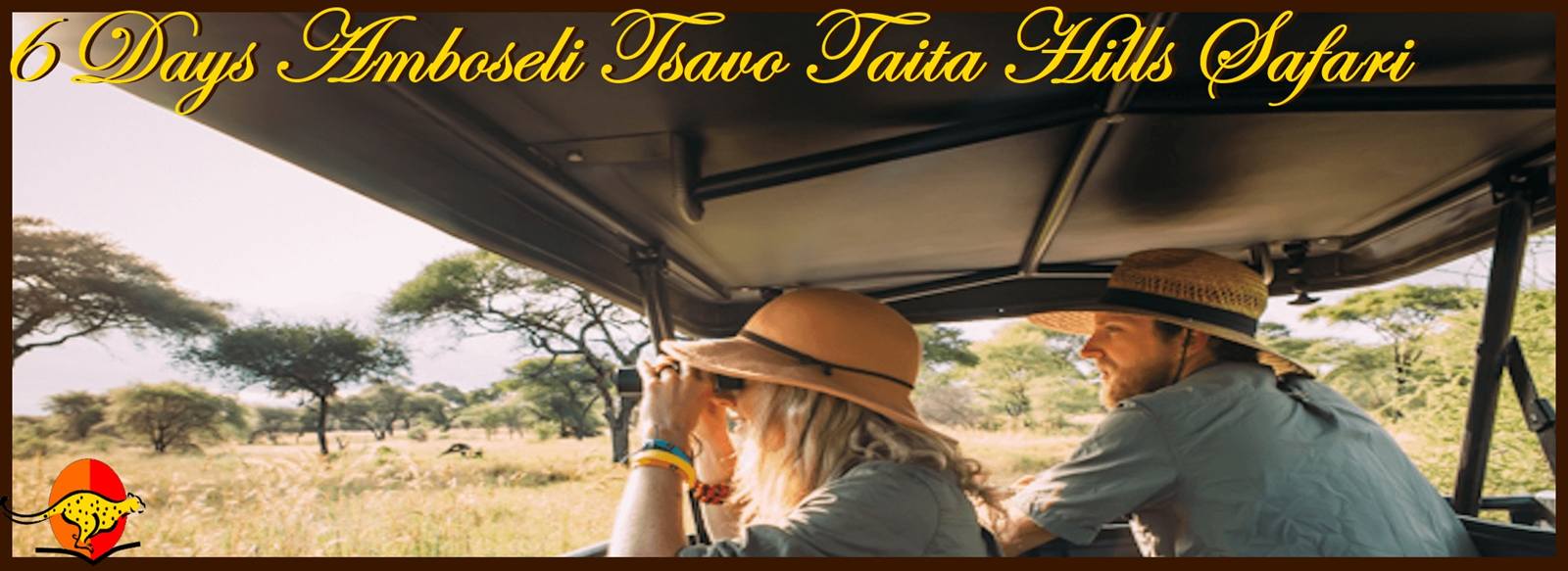
A Typical Safari Day
| Time | What happens |
|---|---|
| Around dawn | A wake-up call, often with tea or coffee brought to your tent or room. Dress in layers, because early mornings can be cool. |
| Early morning | The first game drive. Parks open at 6 am, and this is when predators are most active and light is best for photographs. |
| Mid-morning | Breakfast, either back at camp or in the bush, depending on your itinerary. |
| Midday | Lunch and a rest at the lodge. This is the time to swim, read, repack your camera bag or nap while the heat peaks and the animals rest. |
| Late afternoon | The second game drive, when the day cools and the animals become active again. |
| Before 6 pm | Back to camp. Visitors must leave the parks between 6 pm and 6 am unless camping, and night game drives are not allowed inside the parks. |
| Evening | Dinner, often around a fire, followed by an early night. |
On full-day game drives, you take a packed lunch with you, so you can stay out in the park instead of returning to the lodge. Driving days between parks work differently, with a morning on the road and sometimes a game drive in the afternoon.
Your Vehicle and Your Guide
Our standard safari vehicle is a custom-built minivan with a pop-up roof, which makes it easy to stand and take photographs while you watch the animals. It carries a maximum of six passengers, so every guest has a window seat and access to the roof. A 4x4 Land Cruiser is available as an upgrade on request. Both vehicle types carry a long-range radio, a cooler box and a first aid kit, and we put complimentary bottled water in the vehicle. See our minivan safaris and Land Cruiser safaris.
Your driver-guide is the heart of the experience. Ours are Kenyans who grew up near the parks, with between 5 and 25 years of field experience, and they speak English and Swahili, with German, French, Italian and Spanish-speaking guides available too. Meet them on our driver guides page. Ask questions, tell them what you most want to see, and let them decide where to go.
What You Will (and Will Not) See
Seeing the Big Five (lion, leopard, elephant, buffalo and rhino) is a common goal, and many first-timers are surprised by how much else there is to enjoy: giraffes, zebras, cheetahs, hippos, crocodiles, flamingos and hundreds of bird species. The honest truth is that no operator can guarantee a particular animal, because they are wild. What a good itinerary does is put you in the best places for the best chances.
| If you most want to see… | Think about… |
|---|---|
| Elephant herds | Amboseli, where big herds walk in front of Mount Kilimanjaro |
| Big cats and the Great Migration | The Maasai Mara, especially from July to October |
| Rhinos and flamingos | Lake Nakuru National Park |
| Hippos | Mzima Springs in Tsavo West and Lake Naivasha |
| Northern specials | Samburu, home to reticulated giraffe, Grevy's zebra and gerenuk |
Not sure which park suits you? Our guide to Amboseli vs Tsavo compares two of the most popular choices.
Where You Will Sleep and What You Will Eat
Safari accommodation ranges from economy lodges and tented camps to luxury properties, and we group them in three levels. Luxury properties are usually inside the parks, with the finest facilities. Comfort properties sit inside or on the edge of the parks. Economy properties are usually outside or on the boundary and are simpler, but still comfortable. In all three, rooms and tents are private with en-suite bathrooms, and most have a swimming pool.
- Tented camps stand on solid foundations with proper beds and bathrooms. Many have a fireplace lounge for cool evenings.
- Meals: all meals are included from lunch on day one to lunch on the last day, with freshly prepared food and packed lunches on full-day drives.
- Electricity: some lodges run on generators and switch off power for parts of the day and night, so charge your camera batteries when power is on.
- Laundry: it is cheap and available at many lodges, so you can pack less.
Money, Tips and Optional Extras
On our safaris, vehicle, driver-guide, meals, accommodation and park entrance fees are included, and hotel and lodge service charges are part of the price. It is customary to tip your driver-guide at the end of the safari, at your own discretion and based on the service you received. Bar gratuities of around a dollar are acceptable.
Optional extras are arranged through us or your driver-guide. A hot air balloon flight over the Maasai Mara is around $450 per person, and a visit to a Maasai village costs $25 per person, paid directly to the village chief.
What to Pack
- Neutral-coloured clothes in light layers, since safari dust is part of the experience
- A jacket or sweater for cool mornings and evenings
- A wide-brimmed hat, sunscreen, sunglasses and lip balm
- Binoculars and a camera with a zoom lens, with spare batteries and memory cards
- Insect repellent and your usual medication in your hand luggage
- A power adapter, since Kenya uses three-pin square plugs
- A small torch
Remember that plastic carrier bags are banned in Kenya, and light aircraft limit you to 15 kg in a soft bag. Our packing list and the full Ultimate Kenya Safari Packing List cover everything.
Health, Safety and Entry
See a doctor or travel clinic weeks before you go to discuss vaccinations and malaria prevention. Buy travel insurance that covers medical treatment and emergency evacuation, and carry bottled water rather than drinking from the tap. Most visitors need an online eTA to enter Kenya, and your passport should be valid for at least six months. Read more in our guide on whether Kenya is safe for tourists.
Safari Manners: The Golden Rules
- Stay inside the vehicle, except at designated picnic or walking areas.
- Keep quiet, and avoid sudden movements or loud noises.
- Keep at least 20 metres from wildlife and never feed the animals.
- Do not leave the track, and keep to the 40 km/h speed limit.
- Take nothing but photographs and leave no litter.
- Ask before photographing people.
See the complete park and game reserve rules.
Common First-Timer Mistakes
- Trying to see too much. Driving times in Kenya are estimates, and roads near the parks can be rough. Three parks in seven days is plenty.
- Packing too much. You will wear the same few things, and laundry is available.
- Choosing only on price. Compare what is included: vehicle type, guide quality and the number of people per vehicle.
- Expecting guarantees. Animals are wild. Patience pays.
- Leaving the beach out. A few days on the coast after the bush is a lovely way to end the trip.
How Many Days Do You Need?
| Time | What works well |
|---|---|
| 3 days | The Maasai Mara, or Amboseli and Lake Nakuru, for a short taste of safari |
| 5 to 7 days | The classic first trip: Maasai Mara plus Lake Nakuru and Amboseli |
| 8 days or more | Add Tsavo, a beach finish or a Tanzania extension |
Frequently Asked Questions
How early do I have to get up on safari?
Usually around dawn, because the early morning game drive is the best time to see animals. Parks open at 6 am, and you will have a rest at the lodge in the middle of the day.
Will I definitely see the Big Five?
No safari operator can promise it, because the animals are wild. A well-planned itinerary of several days in good parks gives you excellent odds of seeing many of them, and a great deal else.
Do I need to be fit to go on safari?
No. Most of the time you are sitting in a vehicle. Roads can be bumpy, so tell us if you have back problems or any mobility needs, and we will plan around them.
How much should I tip my guide?
Tipping the driver-guide at the end of the safari is customary, and the amount is up to you and reflects the service you received. Hotel and lodge service charges are already included in your safari price.
What should I wear on safari?
Light layers in neutral colours, a hat, sunscreen and comfortable shoes. Mornings and evenings can be cool, and the middle of the day is warm.
How many days do I need for a first safari?
Five to seven days is ideal for a first trip and lets you see two or three parks without rushing. Three days is enough for a short taste of safari.
Ready to Plan Your First Safari?
Tell us your dates, your interests and your budget, and our local team will recommend the parks, lodges and pace that suit a first-time visitor.
Get a free custom quote:
WhatsApp Us for a Free QuoteEmail: inquire@flexivelkenyasafaris.com
www.flexivelkenyasafaris.com
Accreditations & booking security




Follow the safari
See Kenya Through Our Lens
Wildlife moments, lodge tours and trip stories from our guides and guests.