
Migration guide
The Complete Guide to the Great Wildebeest Migration
Where the Great Wildebeest Migration is each month, when Mara River crossings happen and how to plan a Kenya or Tanzania safari to see them.
The Short Version
- What it is: a continuous, clockwise circuit of roughly 1.5 million wildebeest plus hundreds of thousands of zebra and gazelle.
- When it is in Kenya: the herds usually arrive in the Maasai Mara from around July and head back south between September and October.
- Best months for Mara River crossings: August and September, with July and October also rewarding.
- How long to stay: at least 3 nights in the Mara, and 4–5 if a river crossing is the main goal.
- Guarantee? No. The animals follow the rain, not the calendar, so timing shifts by weeks from year to year.
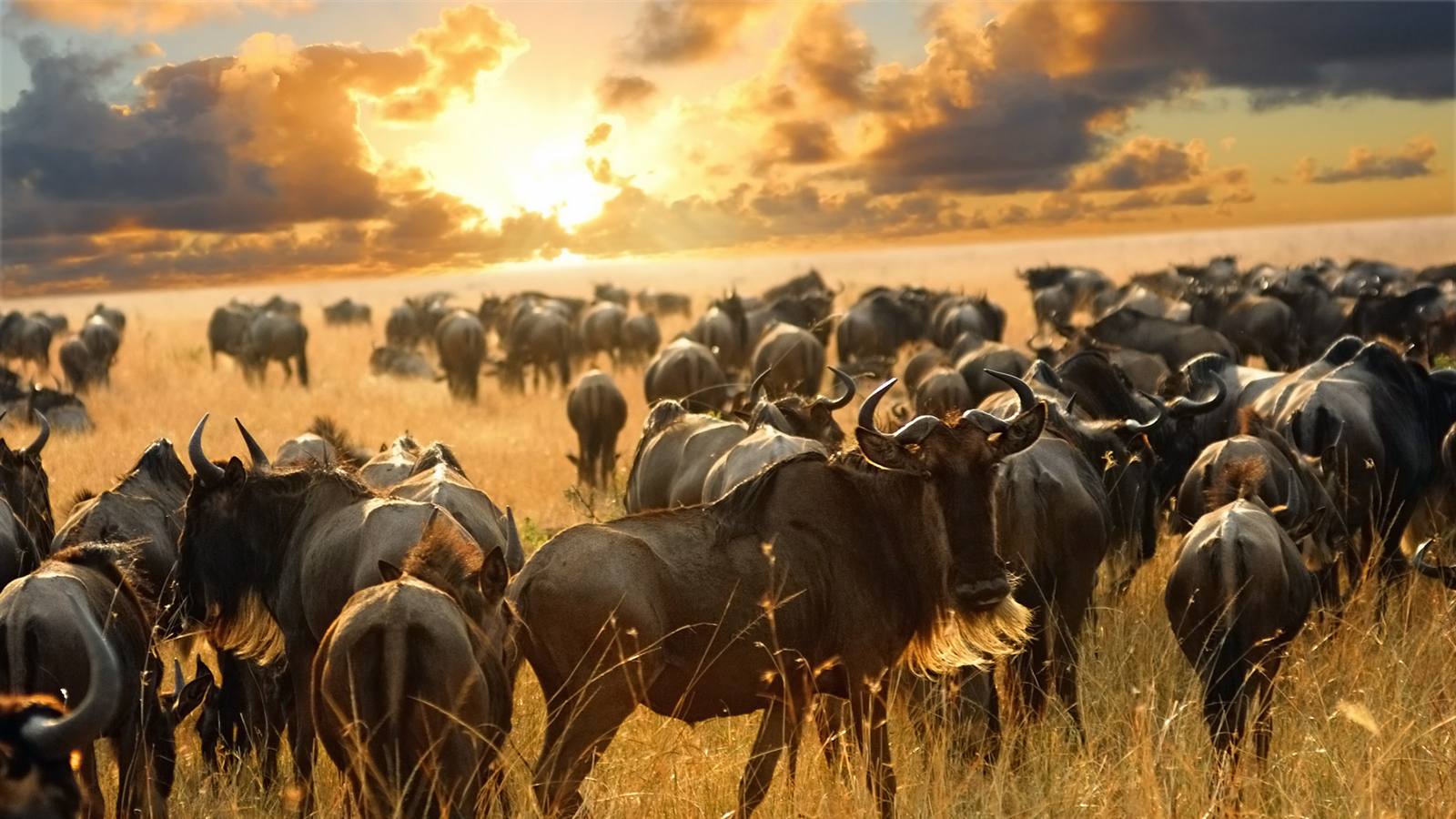
What Exactly Is the Great Migration?
The Great Migration is not a single event that happens on a fixed date. It is a year-round journey in which the herds follow the rains and the green grass that comes with them. Around 1.5 million wildebeest, hundreds of thousands of zebra and many gazelle travel in a rough clockwise circle between the southern plains of the Serengeti in Tanzania and the open grasslands of the Maasai Mara in Kenya.
Because it is a circuit, there is never a moment when the migration “starts” or “ends”. Wherever you travel, the question is simply where the herds are on your dates. The animals move with the rainfall, so a late or early rainy season can move the whole schedule by a few weeks in either direction. Treat any month-by-month timetable, including ours, as a guide rather than a promise.
Where the Herds Are Through the Year
| Period | Where the herds are | What you will see |
|---|---|---|
| January–March | Southern Serengeti (Tanzania) | Calving season. Hundreds of thousands of calves are born, mostly over a few weeks, and predators follow the young. |
| April–May | Moving north-west through the central Serengeti | Long columns on the move during the rains. Camps are quiet and prices are low. |
| June | Western and northern Serengeti, gathering towards the Mara River | Rivers on the Tanzanian side can see early crossings. Herds mass up before the big push north. |
| July–October | Maasai Mara (Kenya) | The classic Mara River crossings, huge herds on the plains and plenty of predators. |
| November–December | Returning south through the Serengeti | Herds heading back to the short-rains grass. The Mara is quieter again. |
For a month-by-month look at the Mara itself, including weather, crowds and value, read our guide to the best time to visit the Maasai Mara.
The Mara River Crossings: What Really Happens
The Mara River is the big obstacle on the journey. Its banks are steep, its current can be strong, and it is home to Nile crocodiles. The herds know the danger and rarely rush. Wildebeest often gather at the water's edge for hours, or even for days, edging forward and then turning back. A crossing begins when a few animals commit and the rest follow in a surge of dust, noise and spray.
A crossing can last a few minutes or go on for an hour or more. Not every day brings one, and the herds sometimes spend a full morning at the bank and then wander away. This is why patience matters more than anything else. The visitors who see the most are usually the ones who stay put, keep their cameras ready and trust their guide to read the signs.
How to Improve Your Chances of Seeing a Crossing
- Travel in August or September. These are the most active months, though July and early October can also deliver.
- Stay at least three nights, ideally four or five. The more full days you spend in the reserve, the more chances you have.
- Let your guide decide the day. A good driver-guide knows which stretches of river the herds are favouring that week and will adjust the plan. Our driver guides are Kenyans who grew up near the parks.
- Start early and pack a picnic. Full-day drives with a packed lunch let you wait at the river without rushing back to camp.
- Keep your expectations flexible. If the herds are quiet at the river, the Mara still offers lions, cheetahs, elephants, giraffes and vast herds grazing across the plains.
Maasai Mara or Serengeti: Where Should You Watch It?
| Maasai Mara (Kenya) | Serengeti (Tanzania) | |
|---|---|---|
| Best months | July–October | January–March (calving), June–July (north), plus the rest of the year as the herds move |
| Size | Smaller and easier to cover. Herds and crossings are concentrated. | Vast. Distances between areas are long, so you need more days. |
| Getting there | About 265 km from Nairobi (5–6 hours by road) or a short flight into a Mara airstrip. | Reached from Arusha or by crossing the border from Kenya on a combined trip. |
| Crowds | Busy from July to September, with many vehicles at the best crossing points. | Wide open, but still busy at popular crossing sites in peak months. |
You do not have to choose one side. Our Kenya and Tanzania safaris combine the Maasai Mara with the Serengeti and the Ngorongoro Crater, so you can follow the herds across the border. If you are still deciding between the two countries, our comparison of Kenya vs Tanzania will help.
Planning Your Migration Safari
How many nights?
Three nights is the minimum that makes sense for the Maasai Mara. For the migration season and a real chance at a river crossing, plan four or five. If you are combining the Mara with Amboseli or Lake Nakuru, add those days on top rather than taking them away from the Mara.
When to book
July to October is peak season, and the camps and lodges nearest the river fill up months ahead. For August and September, we recommend booking 6 to 12 months in advance. Prices rise in peak season, so travellers on a tighter budget often choose June or early October, when the herds are still in the area and the cost is lower.
Where to stay
Lodges inside the reserve give you unrestricted daytime access and are closest to the river. Camps in the conservancies give you night drives, walking safaris and fewer vehicles. Our guide to the top 10 lodges in the Maasai Mara compares both options for every budget.
Fly or drive?
The road from Nairobi to the Mara is about 265 km and takes 5 to 6 hours, with a stop at the viewpoint over the Great Rift Valley. If time is short, a fly-in safari turns the journey into a short flight and gives you more game-viewing time. Remember that light aircraft have a baggage limit of 15 kg in a soft bag.
Hot air balloon
A sunrise balloon flight over the Mara plains is an optional extra on our Mara safaris. It costs around $450 per person, so enquire with us when you book. It is one of the best ways to see the scale of the herds from above.
Behaving Well at the River
Crossings attract many vehicles, so good manners matter. Stay inside your vehicle, keep your voice down, and never ask your driver to leave the track. Park rules require vehicles to stay on the road, keep a respectful distance from the animals and stay below 40 km/h. See the full park and game reserve rules before you go.
What to Pack for Migration Season
- Binoculars and a zoom lens, because crossings can be some distance from the track
- Spare batteries and memory cards, since you may take hundreds of photos in one sitting
- A dust mask or buff for dry-season drives
- Layers: mornings and evenings are cool, midday is warm
- A hat, sunscreen and sunglasses
Our full safari packing list covers everything else.
Frequently Asked Questions
When is the wildebeest migration in Kenya?
The herds usually arrive in the Maasai Mara around July and stay until September or October before heading back south to Tanzania. The exact timing depends on the rains, so it can shift by a few weeks each year.
When do wildebeest cross the Mara River?
Crossings are most frequent in August and September, and can begin as early as July and continue into October. They are unpredictable, so we recommend staying several days to improve your chances.
Is a river crossing guaranteed?
No. Wildlife cannot be guaranteed on safari. A longer stay in the right months and an experienced driver-guide give you the best chance of seeing one.
Is it better to see the migration in Kenya or Tanzania?
It depends on the month. The Mara is the place for river crossings from July to October. The southern Serengeti is where you see calving in January to March. A combined Kenya and Tanzania safari lets you see more of the journey.
How many days do I need in the Maasai Mara for the migration?
We recommend at least three nights, and four or five if seeing a river crossing is your main goal.
Can I see the Maasai Mara outside migration season?
Yes. The Mara has resident lions, elephants, giraffes, buffalo and more all year round, and the green season brings lower prices and far fewer vehicles. Our best time to visit guide explains each month.
Ready to Plan Your Migration Safari?
Tell us your dates and group size and our local team will build a Maasai Mara or Kenya and Tanzania itinerary around the herds, with lodges that suit your budget.
Get a free custom quote from our Mara specialists:
WhatsApp Us for a Free QuoteEmail: inquire@flexivelkenyasafaris.com
www.flexivelkenyasafaris.com
Accreditations & booking security




Follow the safari
See Kenya Through Our Lens
Wildlife moments, lodge tours and trip stories from our guides and guests.